
CategoriesCompany Insight Tips & Tricks Uncategorized

Industrial & Clean Energy Transition (Lithium)

As global energy transition accelerates, Lithium has shifted from a niche industrial input to the foundational commodity of modern transport and power storage. Yet, the path from brine extraction and hard-rock mining to battery-grade lithium carbonate (LFP and NCM standards) is plagued by geopolitical friction, technical refining bottlenecks, and volatile price swings. Ion & Alloy Global acts as the stabilizing force within this supply chain, ensuring that manufacturers and intermediaries secure certified, production-ready material without exposure to open-market shocks.

(Text Block 2): Navigating the lithium market requires more than simple capital; it requires deep oversight of chemical purity and processing timelines. Intermediate buyers frequently face risks of inconsistent grading or delayed shipments from overseas processing facilities. Ion & Alloy Global eliminates these vulnerabilities by vetting suppliers at the extraction and conversion levels. We provide end-to-end chain of custody, ensuring that every ton of lithium brokered meets the exact chemical purity specifications required by modern giga-factories.

CategoriesCompany Insight Lifestyle Uncategorized

Navigating IAEA Protocols in High-Consequence Nuclear Trades

The Precision Frontier of Energy and Research Commodities

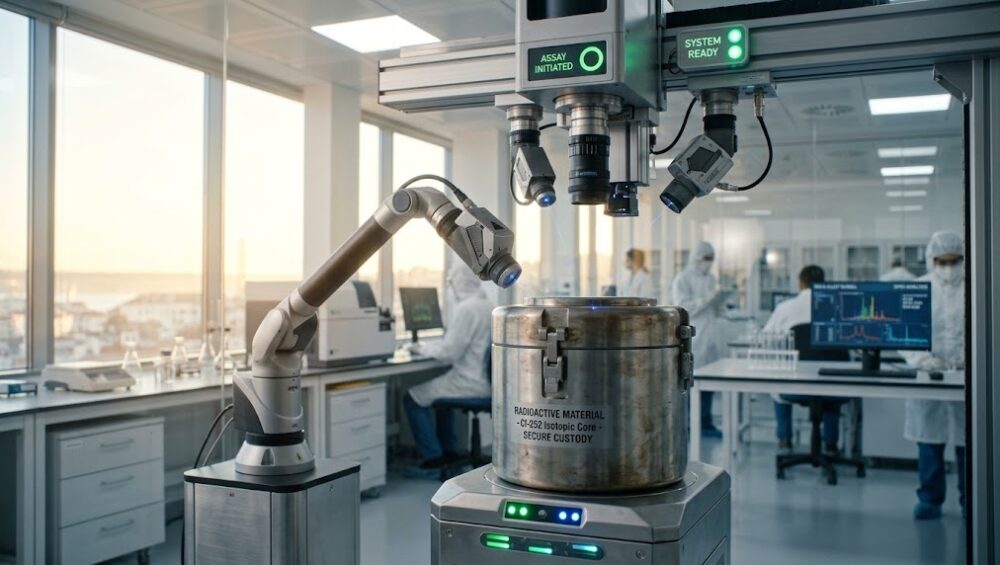
While precious metals anchor global financial reserves, industrial radioisotopes and nuclear feedstocks represent the most tightly regulated assets on earth. Elements like Californium-252 a critical neutron emitter for reactor start ups and deep earth prompt gamma neutron activation analysis and enriched Uranium operate in a transactional tier defined by micro-gram availability and sovereign-level compliance.

Executing transactions in this domain requires an operational architecture where physical security, radiological safety, and multi-lateral export controls intersect seamlessly.

CategoriesCompany Insight Creative Lifestyle Uncategorized

Neutralizing Contamination Risks in Strategic Lithium Reserves

The Purity Dilemma in the EV Supply Chain

The global transition to electrification has elevated battery-grade Lithium Carbonate and Lithium Hydroxide  to the status of critical sovereign resources. However, mass procurement hides a pervasive operational hazard: the purity variance gap.

While raw lithium concentrate (spodumene) is traded in bulk, refining it to battery-grade quality requires purity thresholds exceeding 99.5%. Contamination by trace elements—even at parts-per-million (PPM) levels—can compromise energy density, induce thermal runaway risk, and invalidate battery cell manufacturer warranties.

Impurity ElementMaximum Threshold (PPM)Downstream Impact on Cell Performance
Iron ($Fe$)$< 5$ PPMMicro-short circuits and thermal runaway risks
Sodium ($Na$)$< 20$ PPMDegradation of cathode crystalline structure
Magnesium ($Mg$)$< 50$ PPMReduced ion mobility and faster capacity fade
Calcium ($Ca$)$< 50$ PPMInternal cell impedance spikes during fast-charging

Spectroscopic Verification at the Point of Intake

To protect gigafactories and sovereign battery stockpiles from off-spec shipments, Miguel Pedras enforces a strict Laboratory-First Trade Protocol.

Rather than relying on origin-issued batch certificates, independent metallurgists execute inductively coupled plasma mass spectrometry (ICP-MS) and X-ray diffraction (XRD) analysis at bonded transit hubs prior to title transfer.

Securing Long-Term Industrial Yields

For automotive original equipment manufacturers (OEMs) and grid-storage developers, securing lithium is no longer just a volume contract—it is an exercise in quality assurance. Integrating molecular-level verification directly into the trade pipeline guarantees that every metric ton delivered meets exact electrochemical specifications.