CategoriesCreative Lifestyle Uncategorized

The New Rarity: Navigating the Opaque Markets of PGM and Industrial Catalysts

The landscape of precious and strategic metals is shifting rapidly, driven by energy transition and strict emissions standards. Within this volatile environment, Rhodium and Palladium remain irreplaceable industrial staples, yet their supply chains are notoriously opaque and fragile. For manufacturers and industrial buyers, securing consistent supply without incurring ruinous price volatility is the central challenge of the decade. Miguel Pedras bridges this gap. We do not just trade; we broker stability.

Strategic Metals Overview (Rhodium & Palladium)


When supply is concentrated in a handful of geographically sensitive zones, relying on traditional open-market procurement is a high-risk strategy. Our brokerage services go beyond matching buyers and sellers. We leverage deep, often proprietary relationships at the mine site and primary refiner level to bypass traditional bottlenecks. We provide our partners with foresight—not just on current pricing, but on coming supply shocks—allowing for strategic, multi-year procurement planning rather than reactive buying.

Trust Deficit

Miguel Pedras also addresses the critical “Trust Deficit” that often plagues high-value, intermediate metal markets. For companies engaged in recycling or secondary sourcing (the middlemen), we provide rigorous, third-party chemical and spectroscopic verification of purity (99.9%+) and mass. We eliminate the risk of adulteration before the material ever enters your logistics chain. To consult with us is to secure an authenticated, reliable pipeline of the world’s scarcest industrial materials.

Strategic Metals Overview (Rhodium & Palladium)
CategoriesCreative Lifestyle Uncategorized

Securing Strategic Mineral Supply Chains in an Age of Disruption

Beyond Currency: The Rise of Resource Nationalism

The global trade landscape is undergoing a structural paradigm shift. For decades, institutional risk management focused primarily on currency volatility, interest rate fluctuations, and digital counterparty exposure. Today, a far more tangible risk dominates executive boardrooms and sovereign wealth funds: physical supply chain vulnerability in critical, non-substitutable elements.

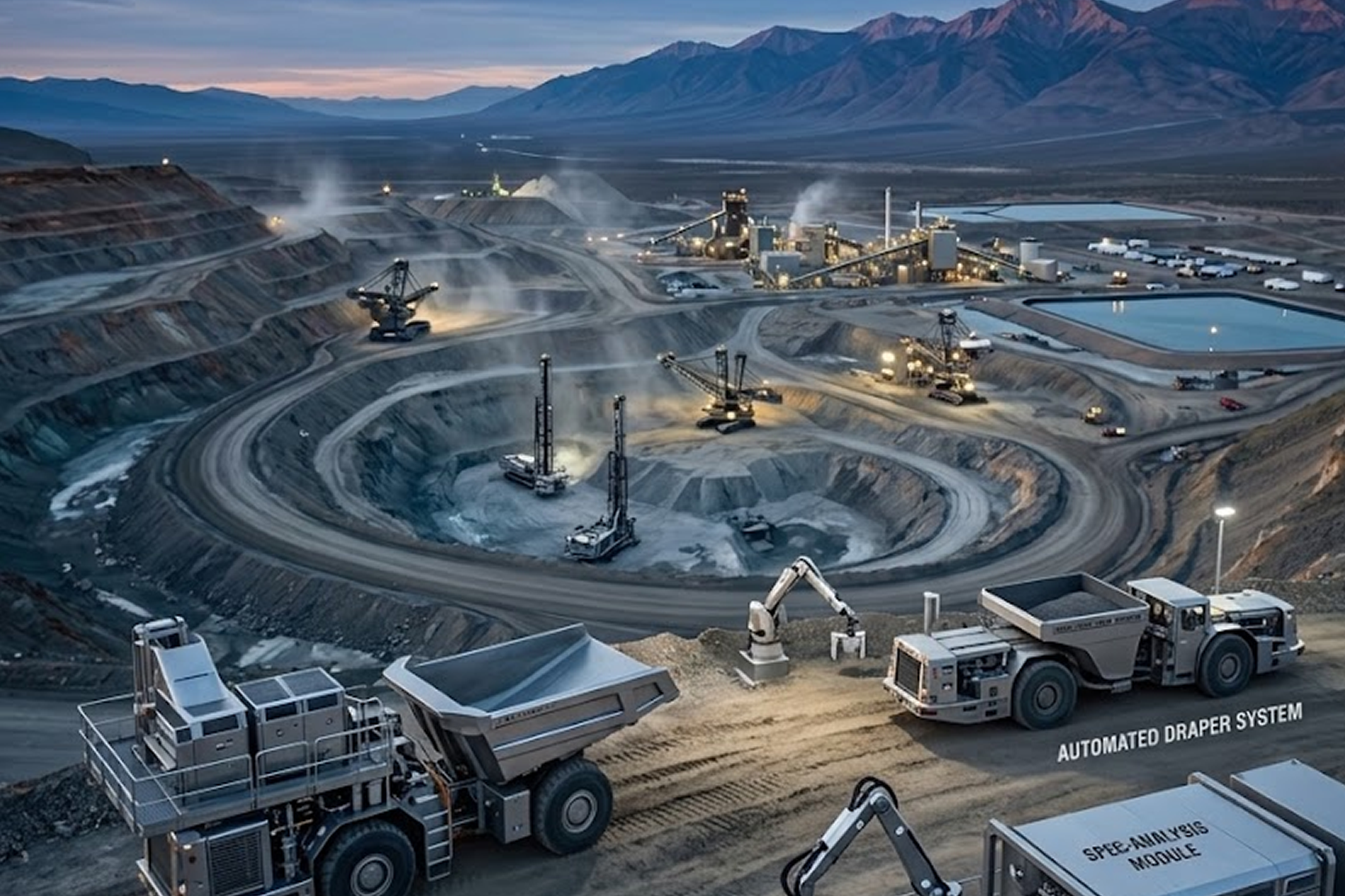
As global industrial policies pivot toward energy transition, advanced defense, and quantum computing, the concentration of key mineral reserves has turned commodities into tools of geopolitical leverage. From the restricted refining output of Platinum Group Metals (PGMs) like Rhodium and Palladium to the tightly controlled export corridors of nuclear-grade Uranium  and industrial isotopes like Californium-252, securing physical material is no longer just a procurement function—it is a matter of strategic sovereignty

CategoriesCompany Insight Lifestyle Uncategorized

Navigating IAEA Protocols in High-Consequence Nuclear Trades

The Precision Frontier of Energy and Research Commodities

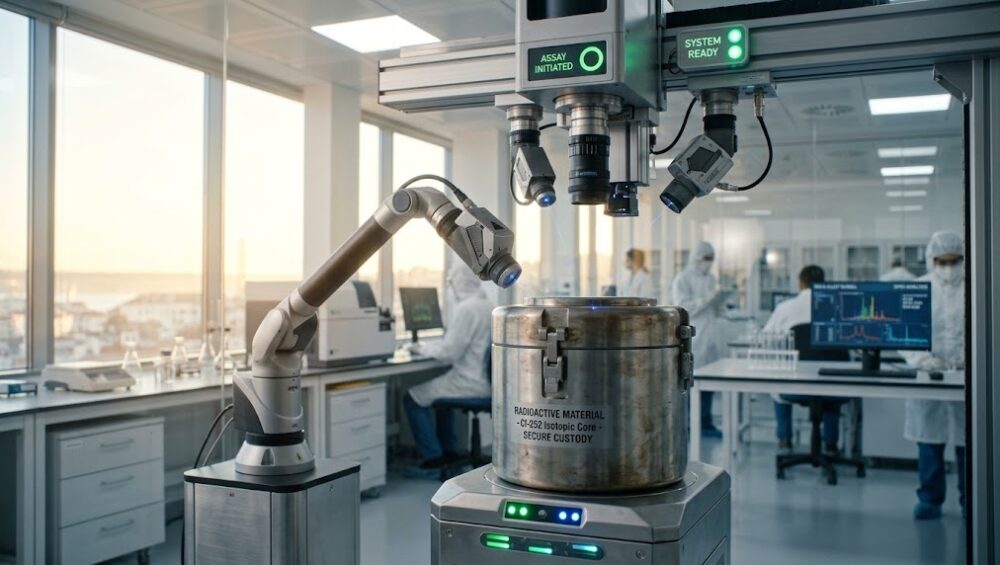
While precious metals anchor global financial reserves, industrial radioisotopes and nuclear feedstocks represent the most tightly regulated assets on earth. Elements like Californium-252 a critical neutron emitter for reactor start ups and deep earth prompt gamma neutron activation analysis and enriched Uranium operate in a transactional tier defined by micro-gram availability and sovereign-level compliance.

Executing transactions in this domain requires an operational architecture where physical security, radiological safety, and multi-lateral export controls intersect seamlessly.

CategoriesCompany Insight Creative Lifestyle Uncategorized

Neutralizing Contamination Risks in Strategic Lithium Reserves

The Purity Dilemma in the EV Supply Chain

The global transition to electrification has elevated battery-grade Lithium Carbonate and Lithium Hydroxide  to the status of critical sovereign resources. However, mass procurement hides a pervasive operational hazard: the purity variance gap.

While raw lithium concentrate (spodumene) is traded in bulk, refining it to battery-grade quality requires purity thresholds exceeding 99.5%. Contamination by trace elements—even at parts-per-million (PPM) levels—can compromise energy density, induce thermal runaway risk, and invalidate battery cell manufacturer warranties.

Impurity ElementMaximum Threshold (PPM)Downstream Impact on Cell Performance
Iron ($Fe$)$< 5$ PPMMicro-short circuits and thermal runaway risks
Sodium ($Na$)$< 20$ PPMDegradation of cathode crystalline structure
Magnesium ($Mg$)$< 50$ PPMReduced ion mobility and faster capacity fade
Calcium ($Ca$)$< 50$ PPMInternal cell impedance spikes during fast-charging

Spectroscopic Verification at the Point of Intake

To protect gigafactories and sovereign battery stockpiles from off-spec shipments, Miguel Pedras enforces a strict Laboratory-First Trade Protocol.

Rather than relying on origin-issued batch certificates, independent metallurgists execute inductively coupled plasma mass spectrometry (ICP-MS) and X-ray diffraction (XRD) analysis at bonded transit hubs prior to title transfer.

Securing Long-Term Industrial Yields

For automotive original equipment manufacturers (OEMs) and grid-storage developers, securing lithium is no longer just a volume contract—it is an exercise in quality assurance. Integrating molecular-level verification directly into the trade pipeline guarantees that every metric ton delivered meets exact electrochemical specifications.